
Buying a used car in Germany for Poland – documents, excise duty and registration
What are Teil I, Teil II and HU? Find out what to collect from the seller, how engine size affects Polish excise duty and when the registration clock starts.
Before travelling to Germany, ask for the exact engine capacity in cubic centimetres, confirmation that both registration documents are available, and the expiry date of the German roadworthiness inspection (HU). The engine size can change your bill by thousands of złoty. The paperwork and inspection date can change how you get the car home.
This guide covers a private buyer bringing a car to Poland for personal use and registering it there for the first time. The example is a non-hybrid petrol or diesel passenger car previously registered in Germany, more than six months past first registration and with over 6,000 km on the clock. Rules checked on 27 November 2026.
What should you collect in Germany?
| Document | What to check before leaving |
|---|---|
| Sale contract or invoice | Check the seller, buyer, price, date and VIN. Match the VIN to the one on the car. |
| Zulassungsbescheinigung Teil I and Teil II | Collect the originals of both parts of the German registration certificate. Resolve any missing document before paying. |
| HU-Bericht | Ask for the roadworthiness inspection report and check its expiry date. It is relevant both to driving the car home and to registration in Poland. |
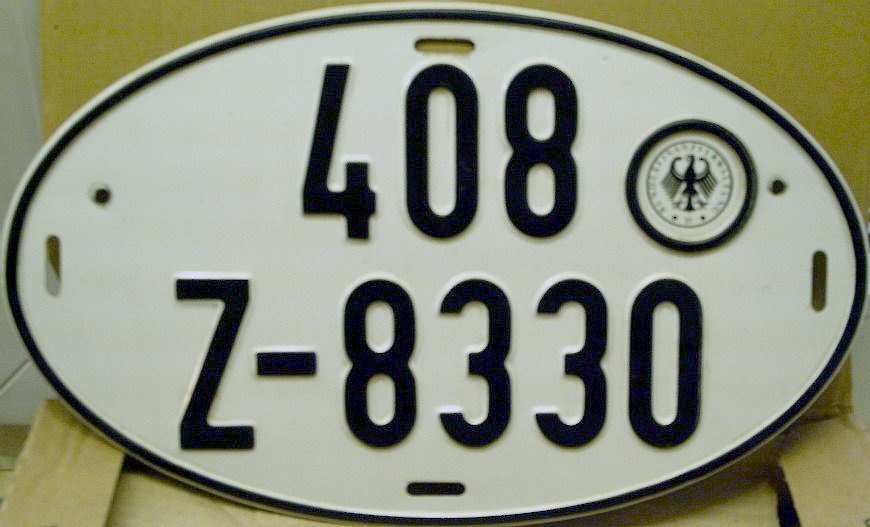
Driving home or using a transporter? If the car has been deregistered and you plan to drive it back, check the export plate (Ausfuhrkennzeichen) procedure with the local German registration office (Zulassungsstelle) before collection. Confirm that the inspection is valid and that the insurance covers the whole journey. If you cannot meet those conditions on collection day, include the cost of a transporter in your offer.
How much Polish excise duty will you pay?
For the type of car described here, the standard rate is 3.1% of the taxable amount up to and including 2,000 cc and 18.6% above 2,000 cc. On an illustrative tax base of PLN 40,000, a 1,968 cc engine gives a bill of PLN 1,240. With a 2,191 cc engine, it is PLN 7,440. That is a PLN 6,200 difference on the same taxable amount. Use the capacity on the registration document. Hybrids and electric vehicles have separate rules.
When do the Polish deadlines start?
If you acquire the right to dispose of the car as its owner in Germany and bring it to Poland afterwards, excise liability arises on the day the car enters Poland. Keep a record of that date.
- Excise return (AKC-US) – file within 14 days of the liability arising. You can file through the Polish PUESC portal.
- Excise payment – pay within 30 days of the liability arising. If you register earlier, both filing and payment are due by the registration date.
- Polish registration application – a private owner has 30 days from bringing the car into Poland to submit the application.
For the registration office, prepare the proof of purchase, German registration papers, excise confirmation, evidence of a valid inspection, payment receipts and the old plates or the applicable declaration explaining their absence. Arrange continuous third-party liability cover. Harmonised EU codes on the registration certificate are exempt from translation. For a German-only contract or additional notes on the certificate, check the scope of the certified Polish translation with your local office.
Search for a car on Oveo and select Germany in the country filter. When comparing two listings, add excise duty and collection from each seller’s actual location before you choose which car to view.
Cover photo – Mhi, License plate of Germany for export vehicles, public domain.